| |
| |
| Glossary of Art Terms |
| |
| Welcome to USBlackart.Com Glossary of common Art Terms. Here we hope to give you a brief definition of various art terms which might be unfamiliar to you. If you have any questions, comments, or ideas please e-mail us. |
| |
|
|
|
|
|
|
|
|
|
|
|
|
|
Paint - Pigment which is dispersed into a liquid, called a vehicle, which includes a binder to make it adhere both to itself and to the surface to which it is applied. Types of paint include tempera, watercolor, oil paint, gouache, enamel, encaustic, fresco, and succor. Return to top |
|
|
|
|
|
Painterly: painting technique characterized by openness of form, in which shapes are defined by loose brushwork in light and dark color areas rather than by outline or contour. Is also a painting technique in which forms are created with patches of color, exploiting color and tonal relationships.. Return to top |
|
|
|
|
|
Painting: - Works of art made with paint on a surface. Return to top |
|
|
|
|
|
Passage - Refers to a certain area of a painting or other work of art; a detail. Return to top |
|
|
|
|
|
Pastel - Pigments mixed with gum and pressed into a stick form for use as crayons. Ground pigments, chalk, and binder formed into sticks for colored drawing. Also, 2) any subdued, high key color (tint). Pastel: a crayon made from pigment mixed with gum and water and pressed into a stick-shaped form; a work of art created from pastels; a pale color. Return to top |
|
|
|
|
|
Pastose - Thickly painted Return to top |
|
|
|
|
|
Pattern - The repetition of any thing-- shapes, lines, or colors-- also called a motif, in a design. Return to top
|
|
|
|
|
|
Palette:-The surface on which a painter will mix his colors. The range of Colors, used by an Artist. 1) The paint mixing and storing surface of various shapes and being made of plastic, metal, glass, ceramic, or enameled trays for watercolor. Glass, palette paper, formica, and oiled wood are used for oil painting; and glass, metal, Styrofoam, and palette paper are used for acrylic painting palettes 2) The selection of colors an artist chooses to work with. Return to top |
|
|
|
|
|
Palette Knife:- a tool originally used by artists for scraping up and mixing the paint from the palette, this implement has been adopted for the application of heavily impasted paint which is spread thickly like butter Return to top |
|
|
|
|
|
Pantone Matching System (PMS): an internationally recognized system of over 3000 pre-mixed colors representing shades on both coated or uncoated stock, along with the precise printing formulas to achieve each color. Each PANTONE color has a specified CMYK equivalent which is numbered and is listed in the swatch guide for quick reference when choosing colors for printing purposes. This system is highly accurate and produces consistent results. Return to top |
|
|
|
|
|
Papier Mache: a technique for creating forms by mixing wet paper pulp with glue or paste. The form hardens as it dries, and becomes suitable for painting. Although papier Mache is a French word which literally means "chewed paper", it was originated by the Chinese - the inventors of paper. Return to top |
|
|
|
|
|
Papyrus: the predecessor of modern paper made from the pith of the papyrus plant used by the ancient Egyptians, Greeks and Romans. Return to top |
|
|
|
|
|
Parchment: an early paper material highly valued during the middle ages. Originally made from goat or sheep skin, parchment today is made from organic fibers and affords artists such as calligraphers a crisp, smooth, high quality surface on which to write. Return to top |
|
|
|
|
|
Permanent Pigment:- refers to any pigment which is expected to last or remain without essential change and is not likely to deteriorate under certain atmospheric conditions, in normal light or in proximity to other colors. Return to top |
|
|
|
|
|
|
|
|
Perspective:- The art of picturing objects on a flat surface so as to give the appearance of distance or depth. Representing three-dimensional volumes and space in two dimensions in a manner that imitates depth, height and width as seen with stereoscopic eyes. Return to top |
|
|
|
|
|
Photorealism:- A style of painting in which an image is created in such exact detail that it looks like a photograph; uses everyday subject matter, and often is larger than life. Return to top |
|
|
|
|
|
Photoshop:- Aprofessional image-editing and graphics creation software from Adobe. It provides a large library of effects, filters and layers. Return to top |
|
|
|
|
|
Photography Posters:- Also photography prints and photography art, the subject matter has been photographed using a Camera and the art work is composition and not a painted work of art. Return to top
|
|
|
|
|
|
Polychrome:- Poly=many, chrome or chroma=colors. Can refer to artwork made with bright, multi-colored paint. Return to top |
|
|
|
|
|
Personification - Representation of something inanimate or abstract as having personality or the qualities, thoughts, or movements of a living human being. Return to top |
|
|
|
|
|
Picasso Art: - Works of art by world renowned artist Pablo Picasso [Spanish Cubist Painter and Sculptor, 1881-1973 ] . works by Pablo Picasso in art museum sites and image archives worldwide. |
|
|
|
|
|
Piebald :- Patchy or spotted, especially in black and white Return to top |
|
|
|
|
|
Polyptych: A single work comprised of multiple sections, panels, or canvas. Diptych= two, triptych=three. Return to top |
|
|
|
|
|
Positive Space: The areas of an artwork that IS the primary subject or object. Positive Space defines the subjects outline. Return to top |
|
|
|
|
|
Pounce bag: Used to dust pounced drawings. To make a pounce bag place a small wad of cotton balls in the middle of a coarsely woven square rag (a pink shop rag works well) and add a couple tablespoons of powdered charcoal before drawing up the edges of the cloth and binding the contents into a ball with tape or string. Lightly tap the ball on a pounced drawing to transfer the design to another surface. Return to top |
|
|
|
|
|
Patina:-Originally the green brown encrustation on bronze, this now includes the natural effects of age or exposure on a surface. Return to top |
|
|
|
|
|
Pentimento:-A condition of old paintings where lead-containing pigments have become more transparent over time, revealing earlier layers. Return to top |
|
|
|
|
|
Pigments:-particles with inherent color that can be mixed with adhesive binders to form paint. Return to top |
|
|
|
|
|
Pigment: any coloring agent, made from natural or synthetic substances, used in paints or drawing materials; the substance in paint or anything that absorbs light, producing (reflecting) the same color as the pigment. Return to top
|
|
|
|
|
|
Plasticizer:-Ingredients added to paint to either make it flow or be easily re-dissolved. Return to top |
|
|
|
|
|
Plane: -a shape which is essentially two-dimensional in nature but who's relationship with other shapes may give an illusion of the third dimension. Return to top |
|
|
|
|
|
Plein Air :-French for "open air". A term describing paintings done directly from the subject Return to top
|
|
|
|
|
|
Pointillism - A method of painting developed in France in the 1880s in which tiny dots of color are applied to the canvas. When viewed from a distance, the points of color appear to blend together to make other colors and to form shapes and outlines. Return to top |
|
|
|
|
|
Point Of View:- the position from which something is seen or considered; for instance, head-on, from overhead, from ground level, etc. Return to top |
|
|
|
|
|
Polymer :-A series of monomers strung together in a repeating chainlike form. That really makes it clear. Return to top |
|
|
|
|
|
Pop Art: -a style of art which seeks its inspiration from commercial art and items of mass culture (such as comic strips, popular foods and brand name packaging). Certain works of art created by Andy Warhol and Roy Lichtenstein are examples of pop art. Return to top |
|
|
|
|
|
Portrait:- a painting, photograph, or other artistic representation of a person. And any artwork that is vertically longer than it is horizontal. Return to top |
|
|
|
|
|
Portrait Art: - Art work that is more in dimension vertically than it is horizontal.Also art work depicting the image of a person usually a close up. Return to top
|
|
|
|
|
|
Positive Space: space that is occupied by an element or a form. Space in an artwork that is filled with something, such as lines, designs, color, or shapes. Return to top |
|
|
|
|
|
Poster Art :- a placard or bill posted or intended for posting in a public place, as for advertising. Illustrations done on such poster, usually inexpensive paper, is referred to as poster art. Return to top |
|
|
|
|
|
Pounce Wheel:- A metal pencil-like tool that has a toothed wheel that freely rotates on the drawing end. The teeth puncture an evenly spaced series of small holes through the paper as you trace a line. Use to transfer drawings, designs and patterns to surfaces with powdered chalk or charcoal. Return to top |
|
|
|
|
|
Primary Colors: Red, yellow, and blue, the mixture of which will yield all other colors in the spectrum but which themselves cannot be produced through a mixture of other colors.With these three colors (and black and white) all other colors can be made. The primary colors themselves can not be made by mixing other colors. Return to top |
|
|
|
|
|
Precipitate:- An inert particle to which dyes can be lacked. Return to top |
|
|
|
|
|
Preservative:- A material that prevents or inhibits the growth of microorganisms in organic mixtures. Return to top |
|
|
|
|
|
Primer:- Coating material, usually white, applied to a support to prepare it for painting. Return to top |
|
|
|
|
|
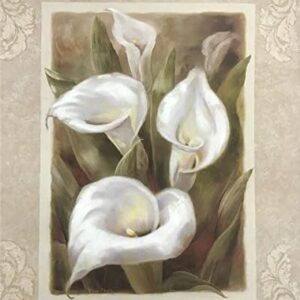
Principles Of Design Or Principles Of Art - Refers to the different ways that the elements of art may be used in a work of art. Artists "design" their works to varying degrees by controlling and ordering the elements of art. To do this, they use such principles as balance, dominance, harmony, movement, pattern, proportion, rhythm, unity, and variety. Return to top |
|
|
|
|
|
Public Art - Art works that are designed specifically for, or placed in areas physically accessible to the general public. May also mean the art work that is now in Public Domain, its Copyrights belong to general Public. Return to top |
|
|
|
|
|
Principles Of Design:- the basic aesthetic considerations that guide organization of a work of art. They include balance, movement, emphasis, contrast, proportion, space, and unity. Return to top
|
|
|
|
|
|
Printmaking: the process by which a work of art can be recreated in great quantity from a single image usually prepared from a plate. Return to top |
|
|
|
|
|
Proportion: a sense of appropriateness in the size relationship of different parts of a work. Return to top
|
|
|
|
|
|
Pure Symmetry: an equilibrium created by identical parts that are equally distributed on either side of a real or imaginary cent4ral axis in mirror-like repetition. Return to top |
|
|
|
|
|
Pva:- Polyvinyl acetate, a manmade resin used as a paint medium and in varnish. Return to top |
|
|
|
|
|
Publisher. The printer and marketing company producing and distributing prints. Return to top
|
|
|
|
|